Insurgency and Terrorism: The Unseen Crisis Devastating Africa"
Yesterday,
Thursday, 17 Jumādā Thani 1430, some of our Muslim brothers were on their way
to perform burial rites for four corpses of our brothers at the Gwange
cemetery,1 [after departing] from the Ibn Taymiyya Center in Maiduguri, when
they ran into a detachment of Nigerian soldiers and the Mobile Police. [This
unit was] under a Joint Task Force called “Operation Flush” which was
introduced under the leadership of ‘Ali Modu Sheriff, the governor of Borno
State. They opened fire upon our brothers with their guns, shot them with their
bullets and now, even as I am speaking with you, there are eighteen brothers
who are currently receiving treatment in the hospital''.
This is the
last official statement by Muhammed Yusuf before the
uprising on 12th June 2009.
The growing wave of insurgency within Africa, fed by shadows and
silence, grows amid these individual tragedies, an evil that is less talked
about but just as deadly. The frightening truth that the jihadist-affiliated
group Al Shabab controls more financial power in Somalia than the
country's government was revealed in a 2020 BBC piece. bringing in an estimated
$15 million every month, half of which is derived straight from the busy
streets of Mogadishu, according to the Hiraal Institute. The narrative reveals
the dark, widespread spread of insurgency, which is a cancer on our lovely
continent that is frequently disregarded because of the lack of media
attention.


Jihadists are a group of like-minded individuals who believe in war and bloodshed as an instrument of restoring power and resolving problems. They use God as justification to restore his peace and defend the Muslim community, or umma. This movement has its origins back in the 1970s, after the Arab world regimes campaigns to overthrow it began. It was until the 1980s that they tasted their real essence and capacity, when the United States of America and its Arab Gulf allies encouraged young Muslims to wage war against the local communists that were backed by the Soviet Union. It is critical to remember that these two decades saw the evolution and development of their philosophy on the battlefield. Abdullah Yusuf Azzam, a mentor to the infamous Osama Bin Laden, is not to be forgotten for his call to establish a base for foreign fighters involved in the war in Afghanistan; this is how the guerrilla movement known as mujahideen was born, giving rise to global Jihadists through training and ideology.

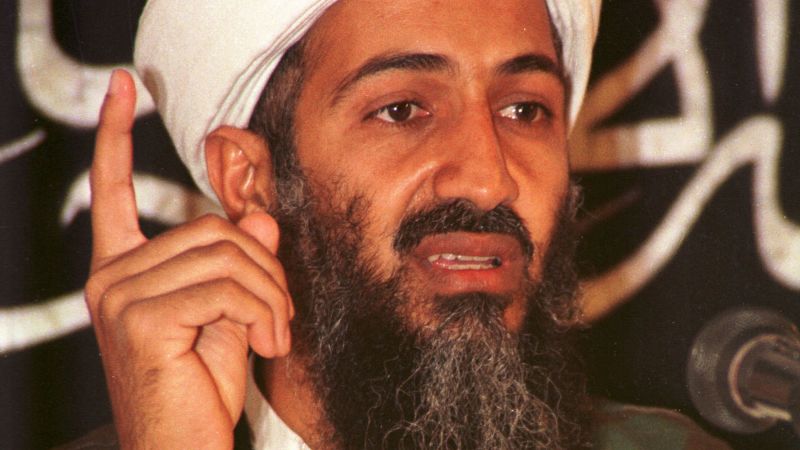
Osama bin Ladin the infamous Al Queda founder and the man behind the 9/11 attacks see link.
A legitimate point should be made without additional debate that this group is founded on a dangerous ideology because it is associated with God, which then justifies its actions, which frequently reject government constitutions; additionally, they frequently endorse the execution of civilians to send a message to communities. To be more specific, in certain states on the continent they frequently implement mass mobilization of soldiers in rural regions.
Should we be concerned about
the Jihadists in Africa?
To truly assess the depth of the Jihadist issue, we must clearly observe
the states in which it operates and study its deeper impact. In Somalia, it is
known as Al Shabab, and in 2013 it declared its loyalty to the infamous group
Al Qaeda, implying that it now receives financial support from the group. The
criminal organization also claimed responsibility for the deaths of 62
individuals in Kenya. It is vital to realize that this organization has found
an ideal atmosphere for it to germinate in the state of Somalia, partly because
it has suffered a dark history that has seen it go through leadership crises at
the government level, such as coups, civil groups, droughts, and famine, which
killed more than 300 000 people.
The Al Qaeda-aligned group known as Al Shabab, which translates to youth, has been an enormous problem in Somalia because the group's primary objectives were to turn the country into an Islamist state and drive Ethiopian troops out of the country, and it has seen a voluntary recruitment of primarily youth soldiers. By 2015, the group had killed over 1,600 people, waged 550 attacks, and wounded approximately 2,2100 people, with suicide bombing having been the preferred method.
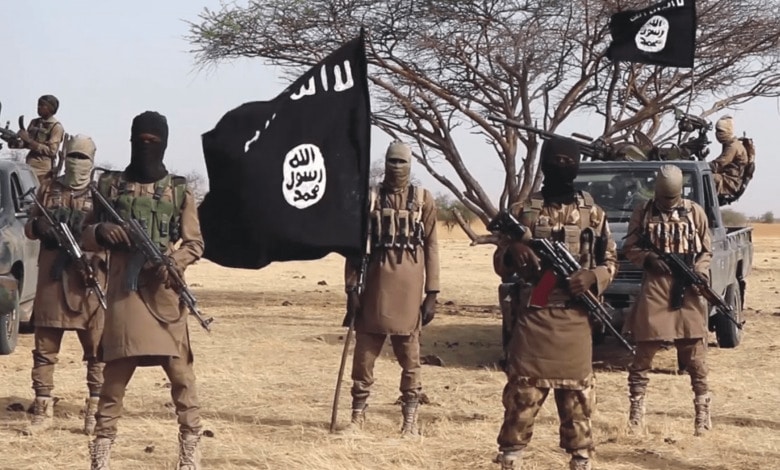
Another well-known similar case study is the Nigerian Boko Haram rebel group, which prefers to call itself ahl al-sunnah wa al-jama'ah, mentioned at the beginning of this article, has more serious effects on the local populations and has spread to neighboring countries, resulting in more 13 000 people being killed and more than 6 million Nigerians affected, displacing more than 300 000 people within the country.
Furthermore, the terrorist group has significantly overstretched federal government security, destroyed government buildings, and ravaged the poorest regions' economies in the North and East. In Nigeria, it appears to be primarily on a mission to convert the majority of the population to Islam, despite the fact that this is not the country's first religious conflict, having experienced a similar crisis in the 1980s.

While carefully assessing the true nature of Boko Haram, it is vital to note that this is a group that is at the top government priority because while investigating its origins in 2002 as a peaceful movement, often organizing lectures and providing charity to the needy, this is said to be its first phase until 2009 when the government army unveiled attacks on the sect leader Muhammed Yusuf compound and nearby Mosque used by members of the group after his famous tirade entitled An open Letter to the Federal Government’ in which he threatened the government and urged them to respond within forty days with the view to a resolution between the government and the group If not, a 'jihadi' operation will begin in the country he stated, which only Allah can stop. It is important to consider that this was in response to the reckless killing of members by police in Bono State, which is when we see the violent era of this group emerge to this day, destroying schools and kidnapping school children for ransom to the government.
Finally, to
shed light on the earlier topic of whether we should be concerned about the
Salafi movement of Jihadists, which is the progeny of this cancer in the
Southern portion of Africa. Mozambique received a gift meant for the country
when GAS was discovered in Cabo Delgado between 2010 and 2013, but 2017 saw a
shift in the already corrupted zone with the rise of Al Shabab and ISIS, as the
characteristics of their emergence and rise are present, one of which is
poverty. The gang has recruited locals, primarily unemployed
young people from low-income families; the disputes and brutality of this group
have resulted in the relocation of over 100,000 people, more than 300 murders,
and a considerable number of cases of rape against women.
While the scope of Jihadism has been investigated, there is no
recognized point in any sort of discourse that seeks to defend its activities.
Africa, as a continent, has suffered from a cruel history of slavery and
colonial conquests. However, in truly legitimate terms, all these actions have
contributed to the struggle for the creation of a self-conscious identity among
the people of this country.
Why is there a surge in the cases of terrorism?
There is an idea we often reject that should be accessed from the bottom
up and vice versa, the problem of corruption has led to many of issues in
Africa, even though there is still imperial theft and interference in our
politics, but they still truly go back and link to corruption, the continuous
theft at the expense of many, which leads to the distribution of services,
which later leads to poverty, primarily in rural areas, which fuels the
uprising of this terrorist groups.
Corruption plays a significant role in the orchestrating of military coups because armies frequently see a vacuum in leadership. These military coups often take time and cause divisions in society, and unfortunately, this is how insurgency groups gather and become involved because they often do not care about the length of the conflict but instead concentrate on the stealing of resources; they sometimes even orchestrate these kinds of disputes as part of their long-term strategy.
Poor governance and corruption have an obvious link because during the weak structures of government, there is a power vacuum that is often open to deal with problems of crimes and intercommunal disputes, and this provides a perfect opportunity for the development of these groups, especially among the youth, because they usually lack employment in the rural communities of the affected states.
The last reason why we see the spread of
this cancer is the porous state of the African borders, because the groups have
spread throughout Africa it highlights that little attention is given to allow
their spread and since this groups poses weaponry it means that they easily transfer this weapons to other countries
within the continent another issues that should be held as agenda in the Africa
Union assembly because it aligned to this notorious issue of Terorism and
insurgency
What then is to be done?
The issue of terrorism is currently being treated as a country problem by many unaffected countries when it should be a collective problem. The rise of these groups in Mozambique highlights that this is every country's problem, especially countries with multiple tribes like South Africa and unequal places like Lesotho with a large existence of rural populations with less access to jobs and resources.
Every
African country must join this conversation to finally declare war on the
existing groups, particularly in countries such as Nigeria, which are currently
their breeding grounds. This is a collective problem that affects every African
country due to corruption, poor governance, and unemployment. Africa must unite
not on paper or in conversation, but in actions as fundamental as this one to
kickstart the progress of this dream.



Comments